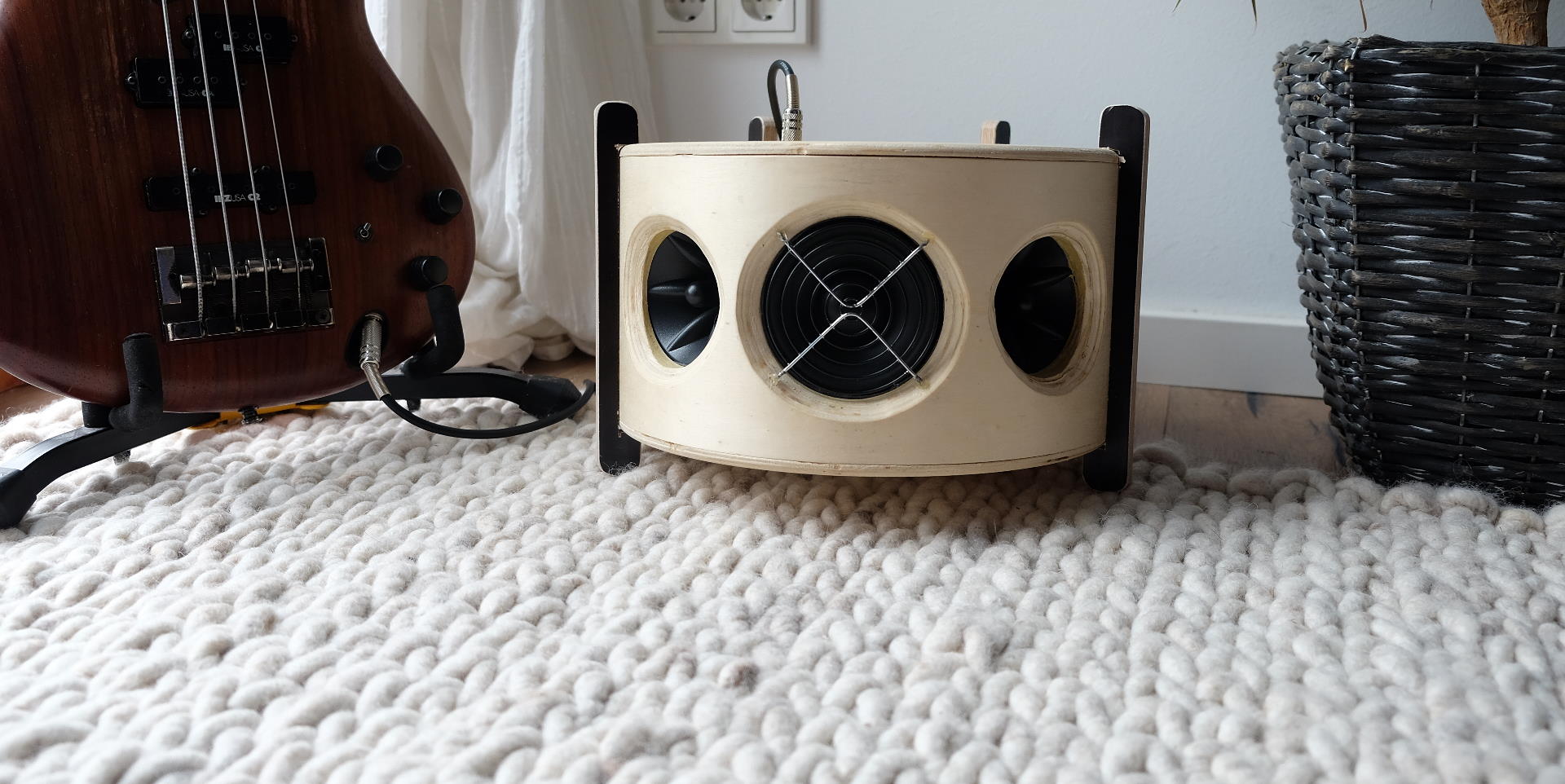
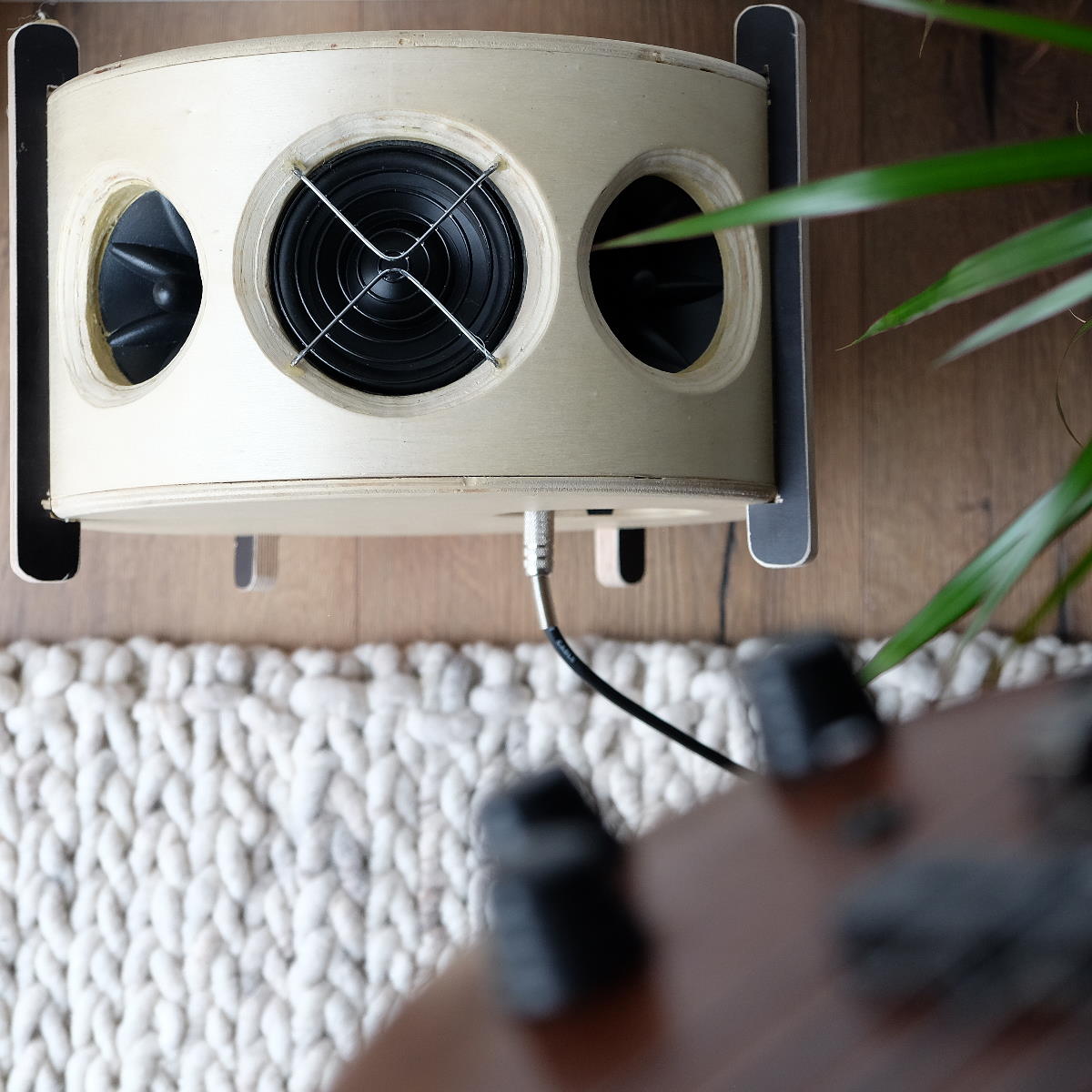
Mobile Instrument Amplifier/Cabinet combo prototype based on Shelly13. AnywhereAmps Alpha has a low power, small footprint aproach. It is designed as a very portable full frequency range practice amplifier with a total weight of only 3.1kg. It features adjustable gain and a 9V DC supply for external effects pedals.
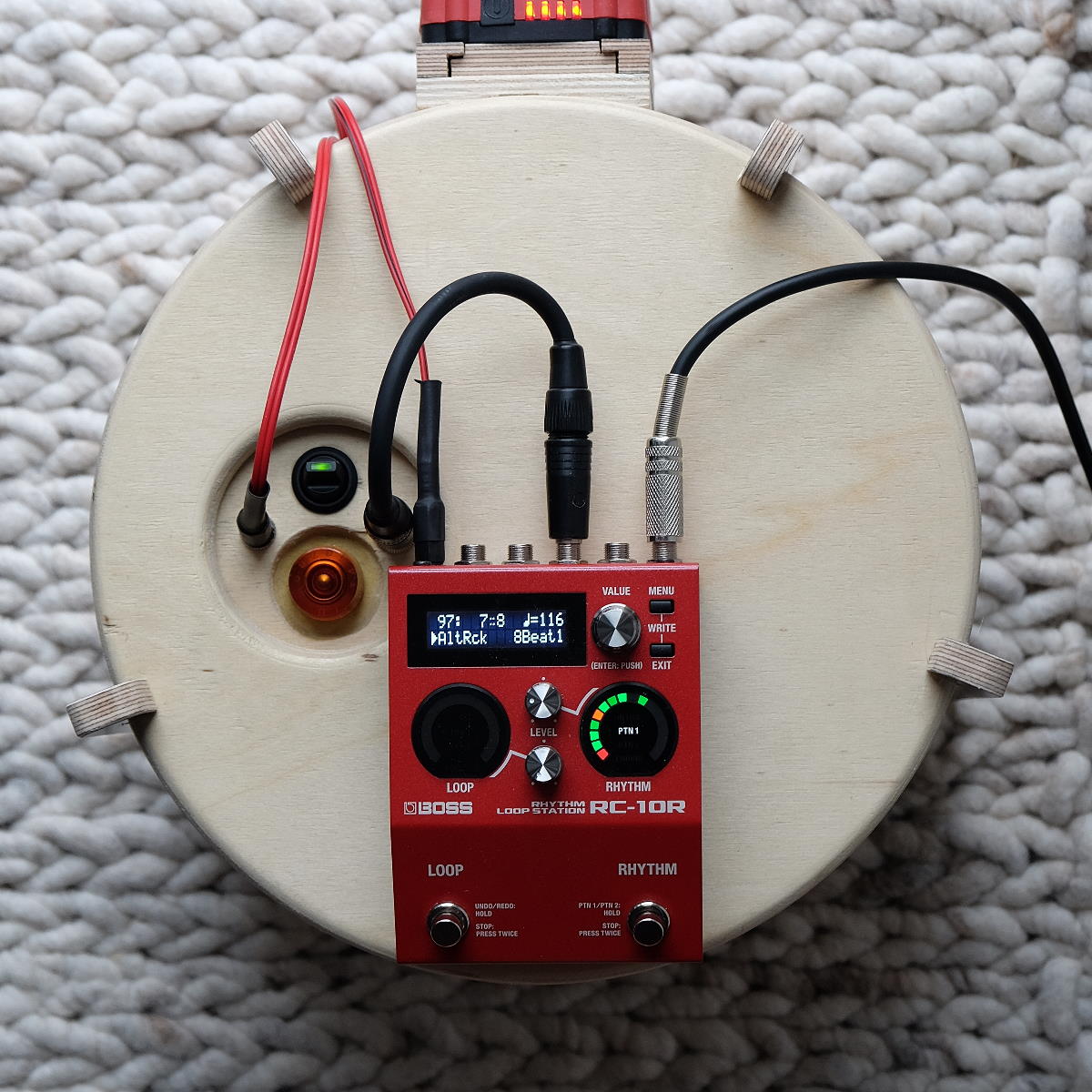
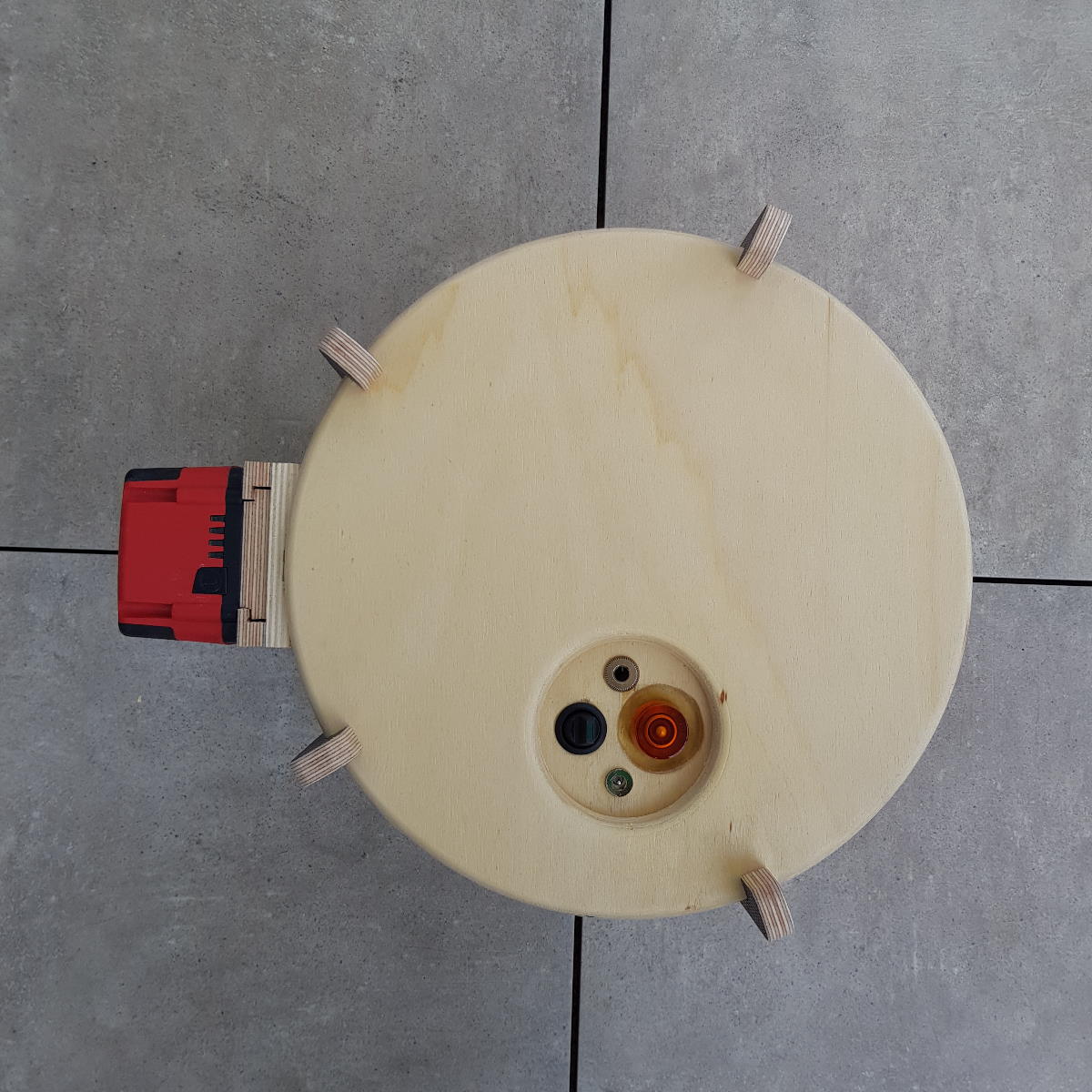
Can be played upright, especially suited for very small practice rooms.9V voltage converter for floor pedals and accessories.Minimalistic HMI: On/off switch, gain, 1/4'' jack, 9V out12'' diameter, 2.6Gallons of volumeBattery on the back plate. Pull up to remove.Preamp and poweramp are stacked on top of each other.
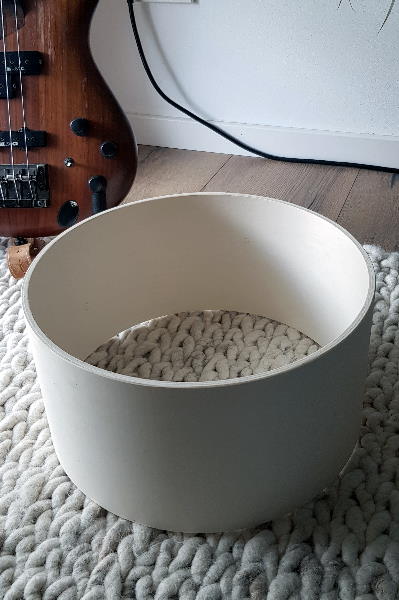
Raw drum shell: 12"x6". Total height is around 17cm, width 30cm, depth (without battery) at 32cm. The enclosed volume incl. amp and speakers is ~9l. I’m using a non-vented cabinet design.
The simulation shows that the volume of ~9l damped cabinet would be a perfect match for the selected 4" speaker. It will go down as low as 44Hz (F#1, one full note above e.g. a Bass’s lowest open string E1). There will be punchy lows at a precision which is still good. The downside is the low efficiency of just 78dB/W/m, so the expected maximum volume I’ll get from the power input will be rather low and the speaker will be driven into its excursion limits early.
The class-D amplifier I selected requires a line-level input, so I had to add a preamp to my design to get sufficient volume from the power stage. Even the cheapest Preamps like this one from Art Pro Audio↗ would add considerable cost to the design. They would weigh a lot and consume quite some power, especially if they are tube preamps, and often have special requirements on input voltage (like AC only). Plus, their design wouldn’t blend into mine.
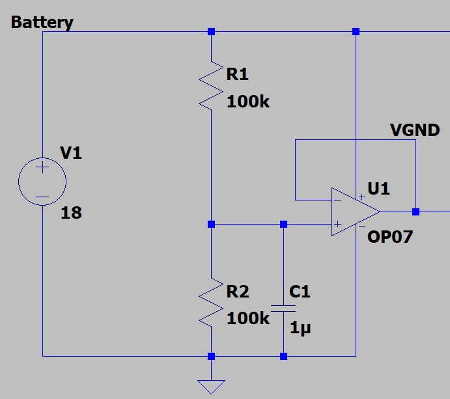
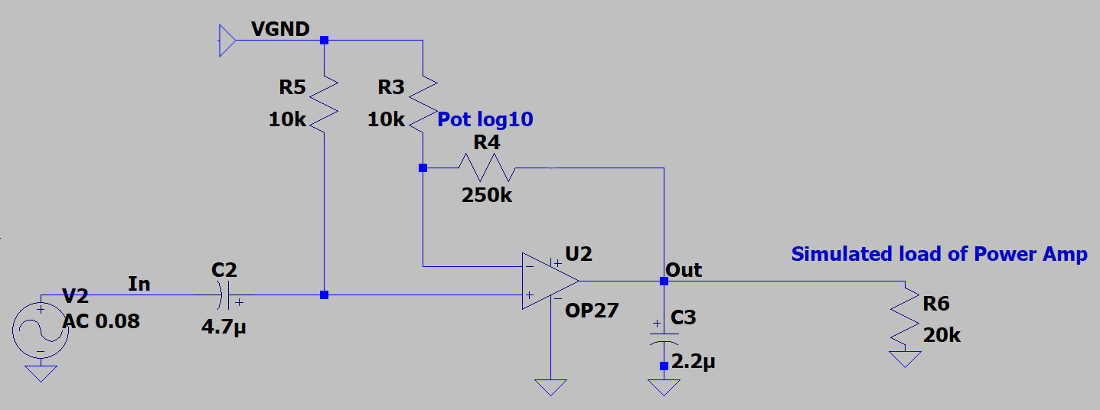
As the preamp would amplify alternating voltage signals but I only have one battery voltage rail available, first I had to think about creating a virtual ground↗ potential that would be the point of signal zero for the gain stage. Luckily, there are a lot of design guidelines↗ about how to operate the amplifier with a single voltage source, so I had something to start with. I used 10kOhm resistors to clamp the inputs of the gain stage to the virtual ground.
AnywhereAmps Alpha should be a multi-purpose instrument combo, so that there should be a wide gain range available to bring everything from a passive guitar to a line level Keyboard to the same voltage levels for the power stage to deal with. That’s why I decided to go for a 0-27dB amplification range↗ and selected resistors for the feedback loop to be 10kOhm and a 250kOhm logarithmic potentiometer.
I used Analog Device’s LTspice↗ to simulate how this circuit might behave when given a typical Audio signal between 20Hz and 20kHz. From my studies I remembered that I might be most interested in a so-called Bode plot which would list both amplitude and phase over frequency in a double-logarithmic scale. Conveniently, LTspice offers such a function↗.
As you can see, the preamp’s output - green - stays flat into the 10kHz range and the phase would only shift a little while the input line -blue - stays ~27dB below.
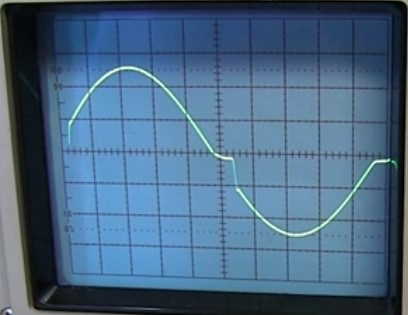
Well. I tried this design on my breadboard with multi-purpose Rail-to-Rail Operational amplifier↗ I had lying around and it worked… not well at all. When I connected a function generator at the input and measured what was supposed to be a sine wave at the output of the LM324↗, I didn’t get a sine wave at the output at all, but a half-sine with some steps and discharge-alike curves around 0, then followed by the negative half-sine… After some search I found out this is called “Crossover distortion↗” and is caused by the asymmetric output stage of this specific op amp type. I was able to correct this a bit when applying a higher load current on the output, but finally I wanted to choose an op amp which was better suited for my audio application without rail-to-rail capability and lower noise ratios. Thankfully, there are quite some pages on that topic like Cicfy Research’s Op-Amp shootout↗. Weighing in a reasonable piece price and the availability at my electronics distributor, I selected the NE5532P↗. The video below shows what I got from the updated op-amp selection.
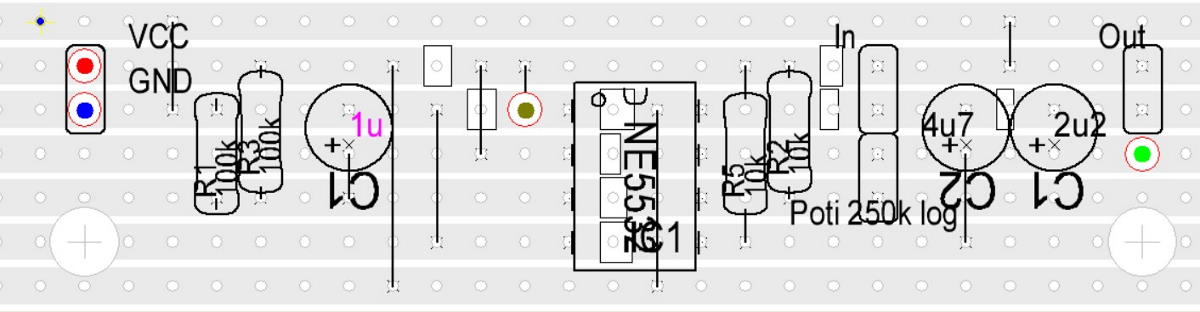
I wanted my circuit board to use as little space as possible while keeping DC voltage supply panes like a frame on the outsides of the board. The board’s left half is dedicated to creating the virtual ground potential while the right half does the amplification part. The design is minimal, using only as much as four resistors and three capacitors.
AnywhereAmps Alpha is absolutely quiet in idle, even with gain full up there’s only so much as a little hissing from the tweeters. No hum, no scratching when turning the gain knob. It works with any instrument due to the wide gain range using 0dB for line levels like Keyboards, preamped instruments, mobile phone, and up to +27dB for passive Bass or Guitar direct in. Maximum volume is fine although the low-lows “flatten down” too early, limiting usable volume range e.g. for organs and 5-string basses. For frequencies in the Bass range at high volume, it still comes down to Physics - the bigger the better. Find some sound samples up here.
For the cabinet, I ordered some raw custom size Tom-tom shells from Cube Personal Drums↗. Cutting and especially hand-routing a curved surface proved to be hard, and the fact that I don’t own a proper wood workshop and did all this work on the balcony of my flat didn’t make it easier.
But after roughly 10h incl. soldering and electronics work, I now have more than a super-portable instrument combo.
It’s a piece of furniture.
I’m going to be playing it a lot. Plus, the good sound keeps me more motivated than ever to go the next step and boost reproduction of the low frequency range with another, larger prototype.